Listening and links: Wayne Shorter, Danceteria, more
July 30, 2026—Some jazz-heavy July reading and listening recs ahead.
WAYNE SHORTER IN 1964
At his Substack newsletter, journalist and musician Tom Moon* writes about the centennial celebration of Miles Davis. To illuminate for readers Davis’s “restless career-long quest for new landscapes,” Moon examines the first of 12 dates at European concert halls in the fall of 1964 for what would become Davis’s so-called “Second Great Quintet”—that September in Berlin, the New Jersey-born saxophonist and composer Wayne Shorter played his inaugural date with the group:
The group’s open, shape-shifting approach was already established when Shorter entered; he added new wrinkles and new dynamics to it. On the early dates, it’s possible to hear the saxophonist first appreciating, then taking advantage of, the profound elasticity of the enterprise. Like it’s slowly occurring to him that there’s more latitude available than he expected. Like he’s sensing, from the telepathy of the rhythm section, that there are infinite ways to decouple the melody from the pulse from the chord sequences to create a new mosaic. We hear the group dynamic shift as he enters. Then as he warms to the recombinative possibilities, he captivates the musicians around him. And together they change the temperature in the room.
I loved this observation of Shorter’s impact on Davis’s group, as well as what the group offered the newcomer, in a year that was significant for Shorter.
Prior to his first dates with Miles and contributing to landmark outings by trumpeter Lee Morgan and trombonist Grachan Moncur III, Shorter signed with Blue Note Records in January 1964. He recorded a trio of now-classic solo albums for the label over the course of the year, the last of which was the lush and consistently interesting Speak No Evil. It was released six decades ago this past June.
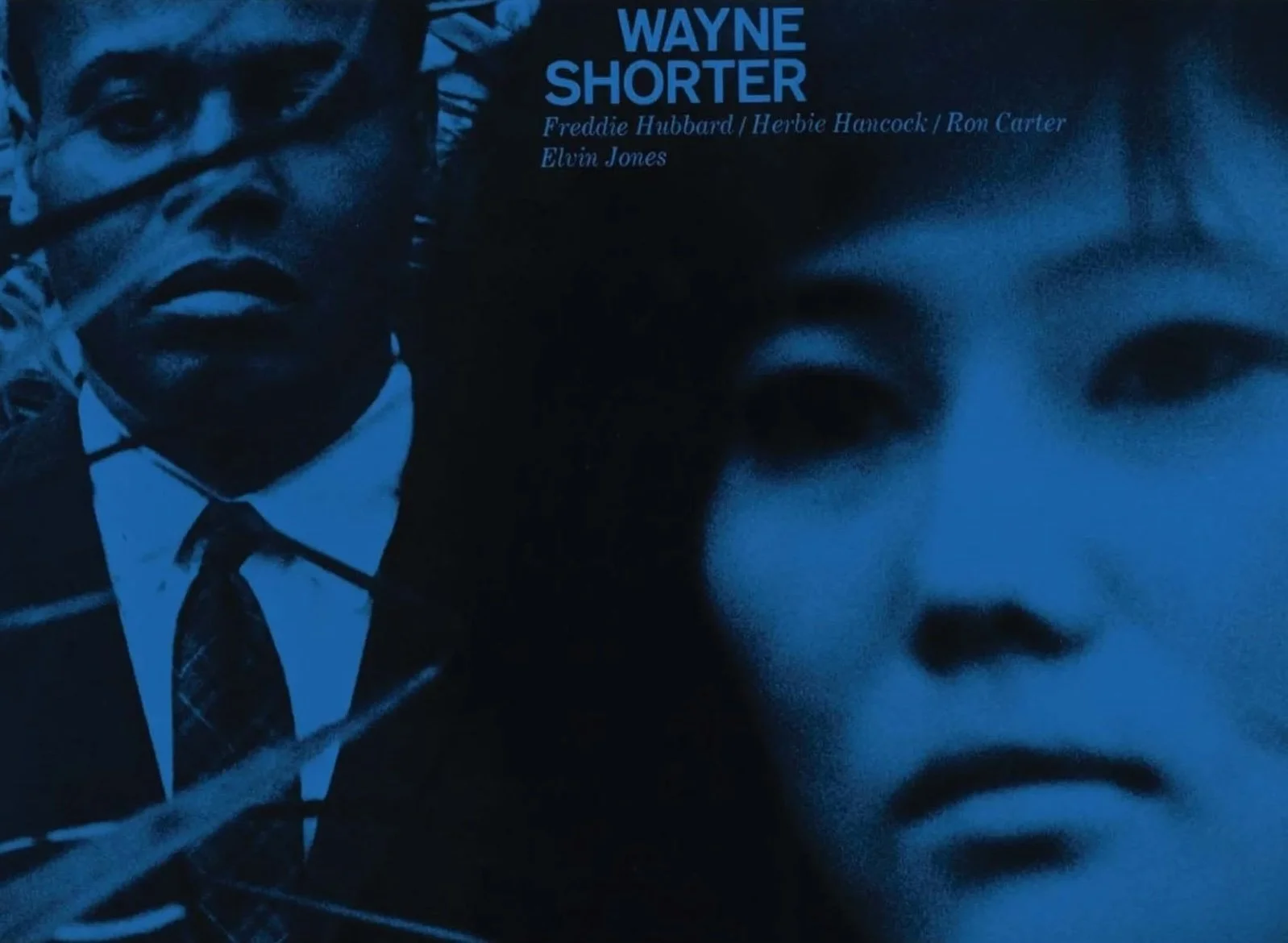
Night Dreamer, Juju, and Speak No Evil were all in the can by December’s end in ‘64. Not long after the date for the second of the records Shorter tracked as a bandleader that year, he joined Miles’s group, initially playing tenor, where his facility with composition proved immediately pivotal: His first studio sessions with the Quintet yielded the lauded E.S.P., named for the 1965 album’s opener, a piece authored by Shorter.
On Speak No Evil, Shorter is joined by bassist Ron Carter and pianist Herbie Hancock, both of whom were also playing with Miles at the time—and Davis certainly didn’t mind the publicity his group garnered as a result of its members issuing acclaimed solo outings.
Just as it is for Night Dreamer and Juju, all the compositions on Speak are Shorter’s own, and five of its six pieces include contributions from trumpeter Freddie Hubbard, who appeared on Shorter’s Wayning Moments and worked alongside the saxophonist in the Jazz Messengers. The group is backed by drummer Elvin Jones, who’d played on John Coltrane’s revelatory A Love Supreme at Van Gelder Studio mere weeks prior to the Speak No Evil session.
Coltrane, Shorter, and others were making use of the modal framework during the era, and Coltrane sidemen Jones, McCoy Tyner, and Reggie Workman comprise the rhythm sections on Juju and Night Dreamer. And any admirer of Trane’s Impulse work of the early 1960s will find a lot to love in Speak—it swings, and the jittery pace of selections like “Witch Hunt” see Jones reliably let loose, but you’ll also return for deep-focused listens of the breezy interplay between Hancock and Shorter during the subdued ballad “Infant Eyes.”
“The compositions on Speak No Evil occupy a rarified plane,” wrote Ethan Iverson in the New Yorker in 2018. “They aren’t quite hard bop, they aren’t quite modal. Elements of everything are just there, hanging out in a new and inspired way. The musicians at large loved it, then and now.”
QUICK HITS
Last year, I posted about Iverson’s cover story for The Nation on Slugs’ Saloon and 1960s jazz. Don’t miss him on 2026’s real centennial, which is the one we’re observing for Miles Davis and John Coltrane.
The authors of Wail: The Visual Language of Prestige Records talk to WRTI’s Josh Jackson about their new book, which was published by RIT Press in 2025.
In his wonderful tribute to the Modern Lovers Live LP, Boston Globe arts reporter Mark Shanahan was kind enough to link to my piece on the Velvet Underground’s Boston era. Thanks, Mark!
Detroit writer Ana Gavrilovska has a lengthy piece in Uncut on John Coltrane’s Ascension—order print or digital copies here.
Steadily nodding in agreement while reading Marcus J. Moore’s Active Listening newsletter—his piece on Chicago’s The Awakening unpacks the group’s two LPs and offers a history of the Black Jazz label. (Let’s give thanks for the Real Gone reissues, and for the label’s broader campaign, because I’d otherwise never own these rare beauties.)
Visionary producer DJ Muggs discussed sampling, Cypress Hill, and lots more with Questlove.
In the 1960s, Budweisers at Seattle’s Penthouse jazz club cost a dollar, and on any given night you could see the likes of Bill Evans, Horace Silver, and others on the bandstand. Tapes of the era made by KING-FM's Jim Wilke have a “visceral, in-the-moment immediacy," writes Thomas Conrad at Stereophile.
DANCETERIA POPPED OFF
Vanity Fair’s oral history of Danceteria, a legendary NYC nightclub that “incubated future stars like Madonna and the Beastie Boys,” is one of the greatest things I’ve consumed of late—a time investment that’s worth every minute!
In his vital 2016 chronicling of early ‘80s-era nightclub culture, Life and Death on the New York Dance Floor, 1980-83, Tim Lawrence wrote that (the fabled second location of) Danceteria was home to “an unprecedented level of party activity that wreaked havoc across three floors.” Isn’t that pretty much everything you’ve ever wanted?
Given the city’s astronomical rents, dorky TikTok-bait pop-ups, and lines for weird doughnuts, it’s difficult to imagine a time when a fountain of unrestrained multidisciplinary creativity could exist and flourish in NYC in the way that it did back then, producing spaces such as the Loft, the Mudd Club, Paradise Garage, and Danceteria.
The Vanity Fair piece, put together by Joy Press, is a celebration of that era and a true unearthing of the history of Danceteria—”the supermarket of style” where “a generation of artsy misfits…lived out their fantasies.”
*Disclaimer: I was lucky enough to support Tom Moon on research for his 1,000 Recordings to Hear Before You Die. You should read it. It’s a great book. Image: Detail, album cover for Wayne Shorter’s Speak No Evil © 1966 Reid Miles for Blue Note Records.
