John Coltrane’s modal jazz and The Grateful Dead
May 14, 2026—In the first part of an in-depth and heartfelt two-episode tribute to the late Bob Weir on the Good Ol’ Grateful Deadcast, cohosts Rich Mahan and Jesse Jarnow briefly discuss John Coltrane. Specifically, Jarnow unpacks the influence that Coltrane’s quartet had on Weir—the Grateful Dead’s rhythm guitarist and cofounder—and the relationship between modal jazz and so-called “Primal Dead,” which is Deadhead shorthand for the widely influential Bay Area rock band’s early years (the debate over precisely which Dead is “Primal Dead” aside).
Weir, who died in January of 2026, “found his first direction as an electric guitarist” 60 years ago, explains the Deadcast’s Jarnow. Here’s Weir, in 2015, speaking to TV news anchor Dan Rather, as excerpted in the episode:
“My guitar style is derived from, basically, listening to piano players to begin with. I listened to a lot of McCoy Tyner, who was John Coltrane’s piano player, in some halcyon years, and the way he set things up for Coltrane to pounce off of.”
Musicologist and Dead scholar Graeme Boone appears on this installment of the podcast and dives into the fundamentals of modal jazz. This style sees musicians get ample freedom to improvise and build melodic lines in a given piece because they’re working within the confines of a single, sustained musical “mode” or two rather than with the flurry of chord changes associated with traditional types of jazz, such as bebop. During the late 1950s and ‘60s, the modal framework was harnessed by the likes of Freddie Hubbard, Miles Davis, Wayne Shorter, and John Coltrane.
Alongside Trane, drummer Elvin Jones, and later, bassist Jimmy Garrison, the Philadelphia-born piano player Tyner played on some of the most important recordings in the history of modal jazz (and jazz in general).
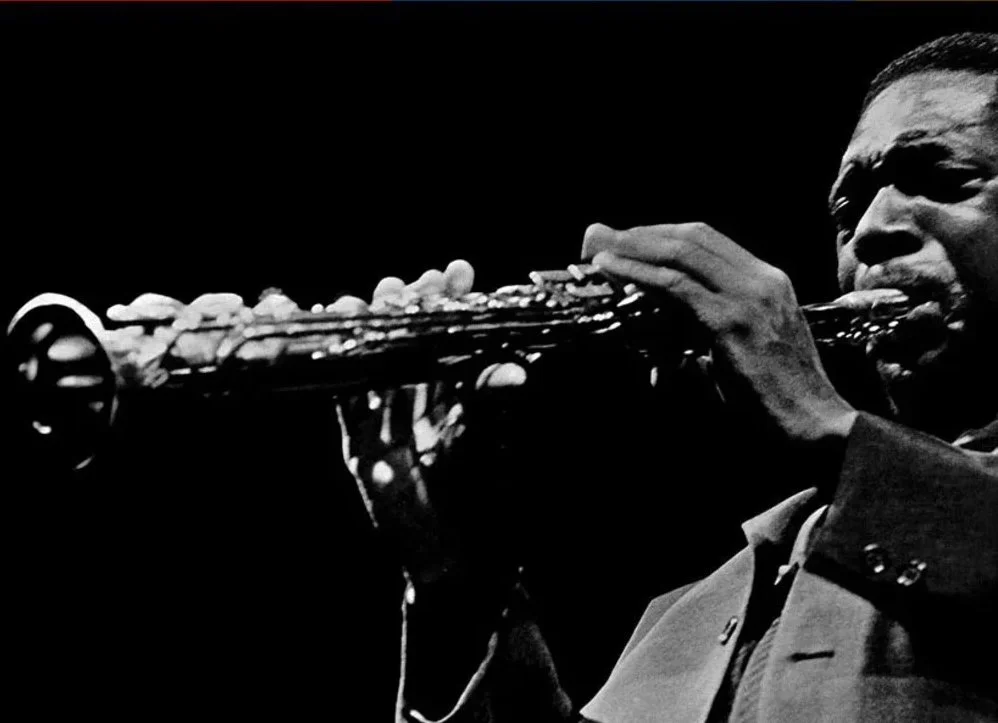
For Deadcast listeners, Boone connects modal jazz to folk music’s scales—with folk’s similarly simple composition structures, the form affords players more room to explore and improvise just as the modal framework offers space to jazz artists. Boone says that early modal experiments among jazz musicians “set the stage for rock and roll in a huge way in the 1960s.”
The John Coltrane Quartet’s rendition of “My Favorite Things,” a commercial radio hit and some of the most gorgeous American music ever committed to tape, plays in the background during this segment of the episode. A year and a half after Miles Davis’s studio dates for Kind of Blue—a landmark in modal jazz that features Coltrane on tenor sax—Trane recorded “My Favorite Things” with Jones, Tyner, and, on double bass, Steve Davis, who grew up in the same Philly neighborhood as Coltrane’s drummer. Boone suggests that Weir was intently focused on Tyner’s contribution to this modal composition when the Dead were gaining steam as a West Coast psychedelic behemoth.
Coltrane left Miles in 1960—his final dates with the bandleader and trumpeter took place on a European tour—and had been working in the modal style as a solo artist. The languid modal ballad “Naima,” which the saxophonist named for his then-wife, was recorded for the groundbreaking Giant Steps within weeks of Kind of Blue’s final sessions. After Tyner departed Coltrane’s group in 1965, the piano player continued to push the limits of modal jazz with Jones and saxophonist Joe Henderson on The Real McCoy and other outings.
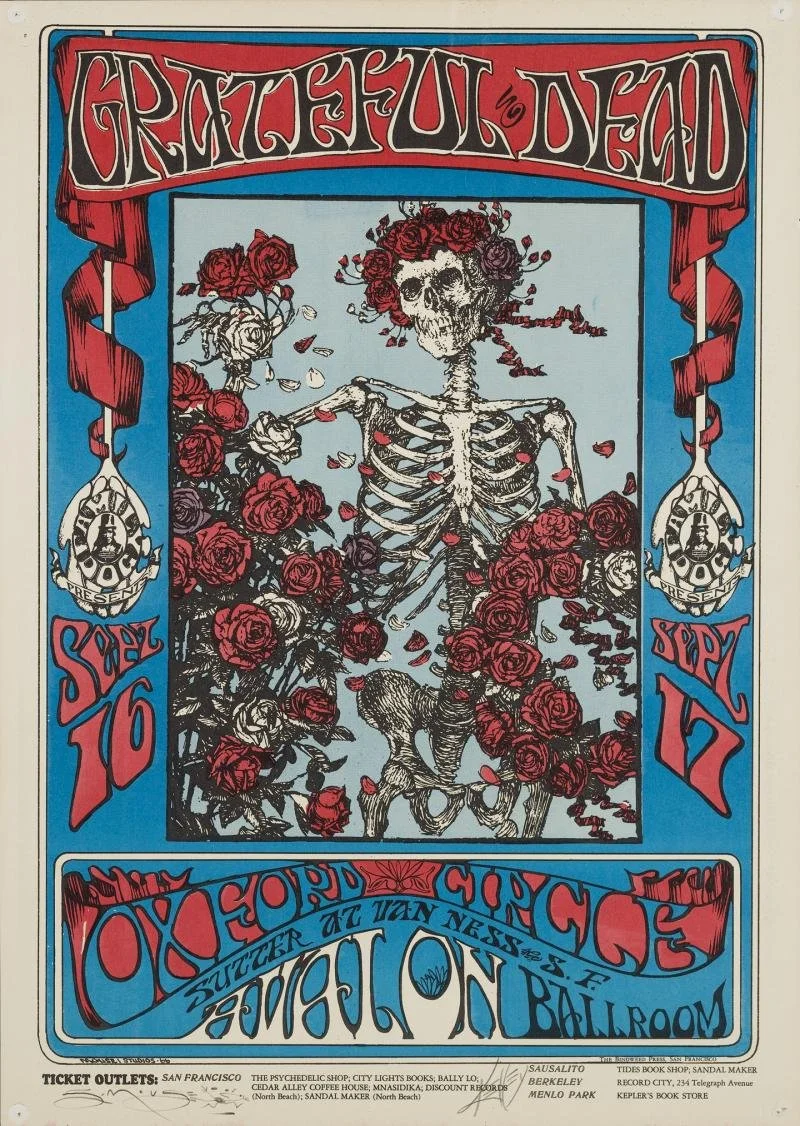
Coltrane was constantly assessing his own performances and trying to improve. He’d hole up in a bedroom at home or hotel room on the road for full days of private rehearsals, treated live dates like a laboratory, and carted home reference tapes of his sessions at Rudy Van Gelder’s studio for study. Similarly, the early Grateful Dead tapes made by Owsley “Bear” Stanley, a chemist and the band’s inaugural sound engineer, weren’t made simply for Bear to listen to while he prepared batches of his universally revered LSD (the Deadcast divulges that he also had Blue Cheer for that).
The band gathered around and listened to the reels of their live performances captured by Bear, absorbing the sounds they made and critiquing their own work. For the Dead, listening to their gigs informed how subsequent performances should be taped and helped engender ideas when they rehearsed.
Dick Latvala, a zookeeper, weed farmer, and certified Head who eventually landed the role of the band’s in-house tape archivist and became known for curating the concert tape series called “Dick’s Picks,” started checking out Dead shows in 1966. During the early 1970s, he began to amass and trade stacks of tapes.
Latvala took to referring to reels of live performances circa 1968–1970 as “Primal Dead,” an era that eventually saw “each ‘Dark Star’ warped into distinct quadrants of improvisational hyperspace,” as the eloquent late journalist and award-winning author Steve Silberman put it in his “Primal Dead at the Fillmore East” essay for Goldmine magazine in 1996.
Written by lead guitarist Jerry Garcia and lyricist Robert Hunter, “Dark Star” was recorded during sessions for 1968’s Anthem of the Sun, an album that, with the support of sound engineers Betty Cantor-Jackson and Dan Healy, featured chunks of live shows blended into studio recordings. It was issued as a very short pre-Anthem 45 RPM single, but in the months and then years following its release, “Dark Star” evolved extensively, shapeshifting in jams onstage and taking on an entirely amorphous, crispy-fried personality all its own.
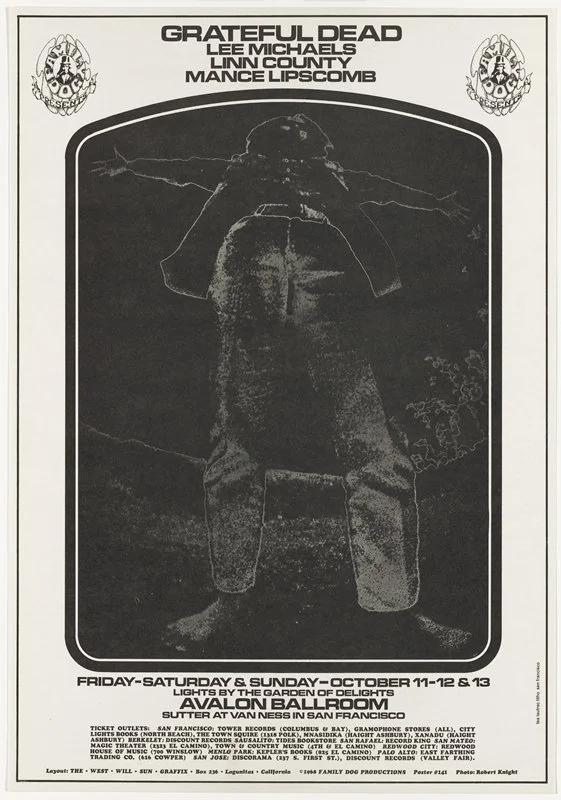
A few months following the release of Anthem of the Sun, one of the shows that Dick Latvala was particularly fond of took place during the second night of the Dead’s run at San Francisco’s Avalon Ballroom. The man clearly had impeccable taste—here’s the Deadcast’s Jarnow in his book, Heads: A Biography of Psychedelic America:
“There is an art to listening to Dead tapes, like impressionist paintings for the ear, details resolving in the mind and third eye. Dick takes it very seriously and in many ways is the first person to articulate and actually understand the power of Grateful Dead tapes as a separate entity than the band itself.”
The “Dark Star” that opens the first of the sets that fall evening in the Bay Area didn’t make the cut for this New York Times feature on the Dead-est of Dead songs, but to my ears, it smokes. The “improvisational hyperspace” that Silberman described in Goldmine is on full display, and even as it’s early in its existence as an original Dead composition (a primal iteration, if you will), there is ample room for the band to stretch out.
There was no organ accompaniment at the Avalon Ballroom that weekend—Tom Constanten, who played on Anthem, hadn’t yet joined them full-time, and Ron "Pigpen" McKernan, who, along with Weir weeks earlier, was sorta fired from the Dead (!) and didn’t join the band on this run for one reason or another. So, without any chirping Vox Continental in sight, during a slow-simmering “Dark Star” on October 12th, 1968, the fluid and probing interplay between the Coltrane fanboys onstage gives way to a volley of crackling ideas, and they build rich, radiant melodic lines around the handful of chords at the song’s center.
The Grateful Dead Guide notes that a “strong jazz element” was detectable in the band’s performances beginning in 1968, and we can probably trace the emergence of that influence at least in part to the group’s late bassist, Phil Lesh, who loved midcentury jazz and recognized the impact and promise of improvisational music in Trane’s early 1960s dates. In his book about John Coltrane’s A Love Supreme, Ashley Kahn reports that in 1965, Lesh regularly heard the sounds of the moving, meditative LP emanating from the windows of apartments in Haight-Ashbury.
A year later, when accolades for A Love Supreme rolled in by way of Grammy nominations and Down Beat’s reader poll, Bob Weir was immersing himself in the work of Coltrane’s piano player. Elsewhere, some several hundred miles south of San Francisco, Laurel Canyon rockers the Byrds were in the studio recording their third album. And although the band’s leader Roger McGuinn told Van Dyke Parks to “think Bach” as it related to the session player’s organ arrangement for Fifth Dimension’s swirling title track, McGuinn's dial was regularly tuned to jazz station KBCA.
McGuinn loved the tapes made of Coltrane’s dates at the Village Vanguard in 1961, and he aimed to mimic the saxophone with his 12-string for “Eight Miles High.” Fifth Dimension’s breakout single bears the imprint of those nights at the Greenwich Village jazz club. Connections have been made between the song’s cosmic cluster of opening riffs and a Village Vanguard recording of Trane’s modal scorcher “India,” which had Eric Dolphy sitting in on bass clarinet. It was included on Impressions, a Byrds tour-van listening staple circa 1965, thanks to guitarist David Crosby.
When Phil Lesh died in October of 2024, both Weir and Dead drummer Bill Kreutzmann mentioned in their online tributes that Lesh had put them on to Coltrane and his quartet. Two years before he passed away, Lesh talked to Forbes about hearing a Coltrane performance in the early 1960s in San Francisco.
“It totally transformed my life and my view of music, because it just kept evolving,” Lesh said. “It just kept changing and evolving, and yet you always were aware wherever you were coming from. It was the finest thing I'd ever heard [chuckle]. And I grew up in the classic music scene, so I hadn't known how deeply improvised music could go and how powerful it could be, and that really opened my eyes, my ears, my heart.”
Disclaimers and T(y)pers Notes: Jesse Jarnow is a friend, and the Deadcast is great. My interest in the Grateful Dead is largely limited to the aforementioned “Primal Dead”—you won’t catch me listening to any recordings captured after the early 1970s. And before my dear late friend Jim won me over by playing his copy of Workingman’s Dead on his back porch one summer night while we were in our mid-20s (we miss you, Jim), you wouldn’t catch me listening to any Dead, ever. I spent my youth mercilessly mocking my sister, a proper Head, for her love of the band (I’m really sorry, Rosalie—I take most of it back).
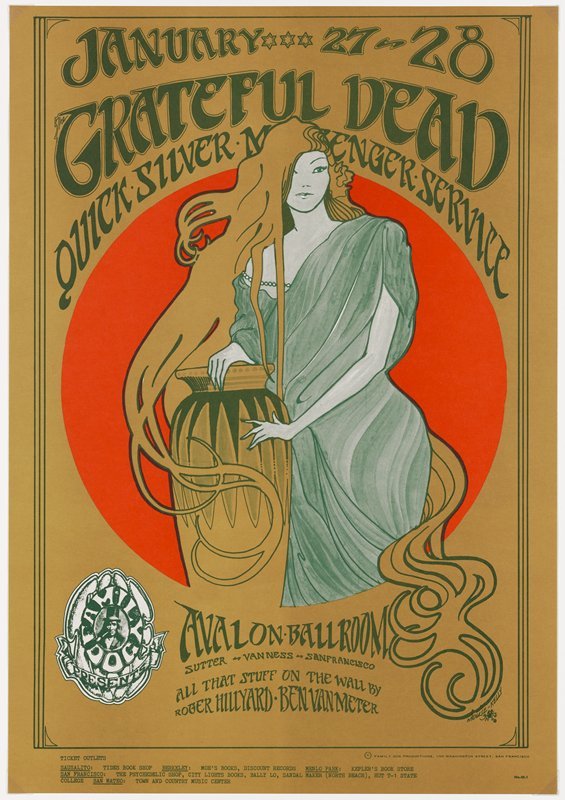
Detail, album cover, Impressions © 1963 Joe Alper for Impulse Records. “Skull and Roses, Grateful Dead, Oxford Circle, September 16-17, Avalon Ballroom, 1966” by Alton Kelley and Stanley Mouse © Family Dog Productions. “Grateful Dead, Lee Michaels, Linn County, Mance Lipscomb, Avalon Ballroom, October 11-13, 1968” by Wes Wilson. “The Grateful Dead, Quicksilver Messenger Service, January 27-28, Avalon Ballroom, 1967” by Alton Kelley and Stanley Mouse © Family Dog Productions.
